Mahjong solitaire feels timeless, as if it had been played in tea houses for centuries. In fact it is a computer game, younger than the Rubik’s Cube. Its story connects a 19th-century Chinese parlour game, an American university computer network and, eventually, the phone in your pocket.
Mahjong: the four-player original
Mahjong (麻將, also spelled mah-jongg) is a game of skill and chance for four players, a little like the card game rummy played with tiles. Players draw and discard tiles to build complete hands of sets and sequences.
Historians generally place its emergence in China during the second half of the 19th century, in the late Qing dynasty, likely developing from older Chinese card games. Many colourful origin stories credit Confucius or ancient emperors, but there is no evidence for them.
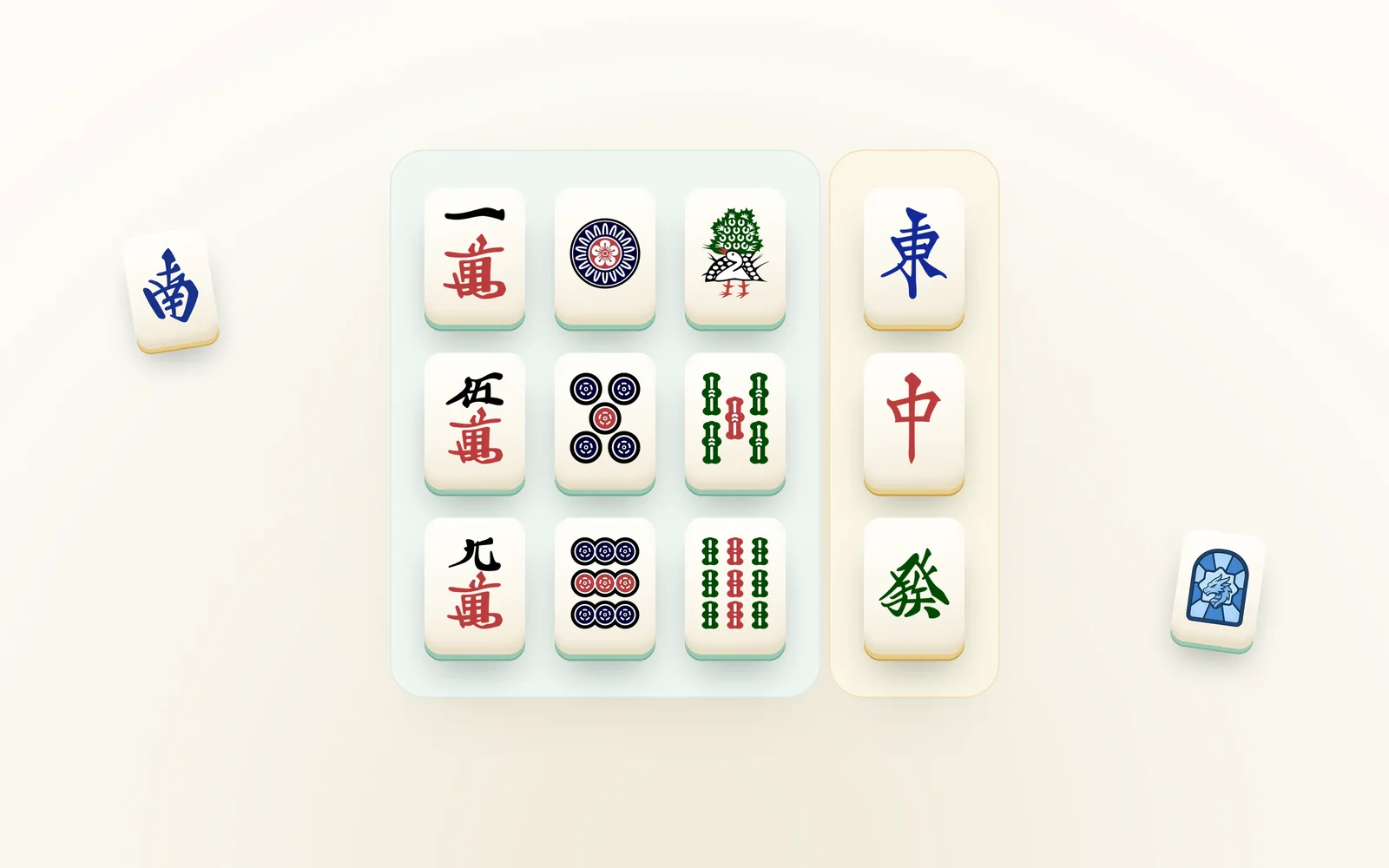
In the early 1920s mahjong became a craze in the United States and Europe. Importers sold sets with English labels, and rule books simplified the game for Western players. The tiles themselves, with their suits of dots, bamboo and characters, along with winds, dragons, flowers and seasons, became instantly recognisable worldwide. (For a full breakdown, see our mahjong tiles guide.)
1981: Shanghai on PLATO
The solitaire game came much later and from a completely different place. In 1981 Brodie Lockard, a programmer, wrote a tile-matching game for PLATO, an early networked computer system used at universities. He called it Shanghai.
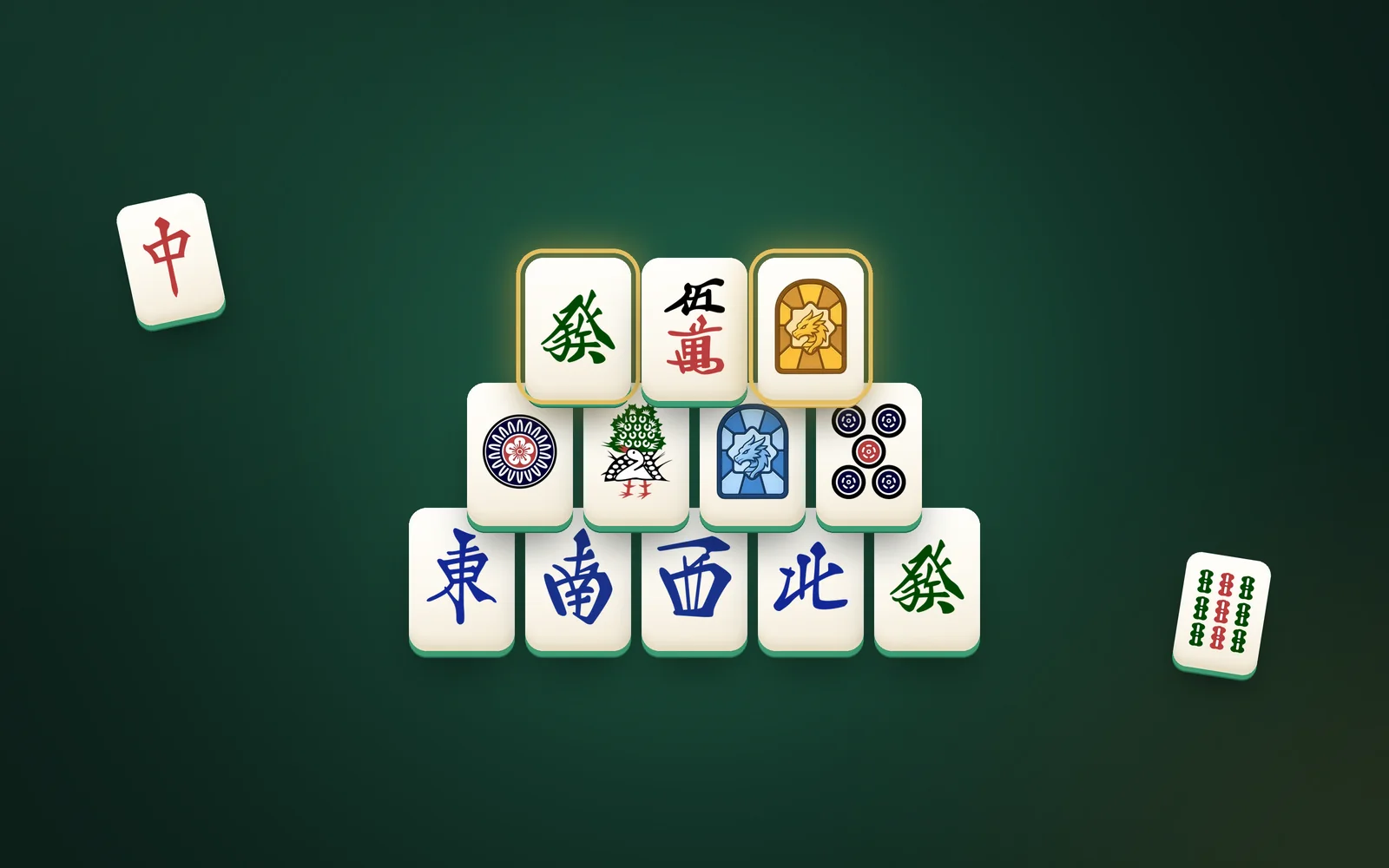
Lockard took the tiles of mahjong but none of its rules. Instead, the 144 tiles were stacked into a layered pyramid, and the player removed matching pairs of free tiles until the board was clear. The idea is often linked to an older Chinese tile game known as “the turtle”, which inspired the shape of the layout.
1986: Activision brings it home
In 1986 Activision published Shanghai for home computers, starting with the Apple Macintosh and followed by many other platforms. It was a hit. The rules were learnable in seconds, the tile art looked beautiful on the new graphical screens, and every board was a fresh puzzle. Sequels and countless clones followed.
Shanghai established the conventions that almost every later game kept:
- The turtle layout, a 144-tile pyramid with a tall centre and protruding edges.
- The free-tile rule: a tile must be uncovered and have an open left or right side.
- Pair matching, with flowers and seasons matching within their groups.
- Helpers such as hints, undo and shuffle.
The Windows years
Through the 1990s and 2000s, mahjong solitaire spread on PCs. Versions were bundled with operating systems, sold in casual-game collections and shared as freeware. Generic titles such as “Mahjong Titans” or “Mahjongg” made the genre familiar to millions of people who had never played the four-player game, which is why many people today assume mahjong is the solitaire game.
Mahjong in your pocket
Smartphones were a natural home for tile matching. Tapping a tile is easier than clicking it, and short boards fit a coffee break. Mobile games added new ideas:
- Level journeys with hundreds of hand-tuned boards instead of one random deal.
- Larger tiles that stay readable on a phone screen.
- New mechanics such as timers, locked tiles and power-ups.
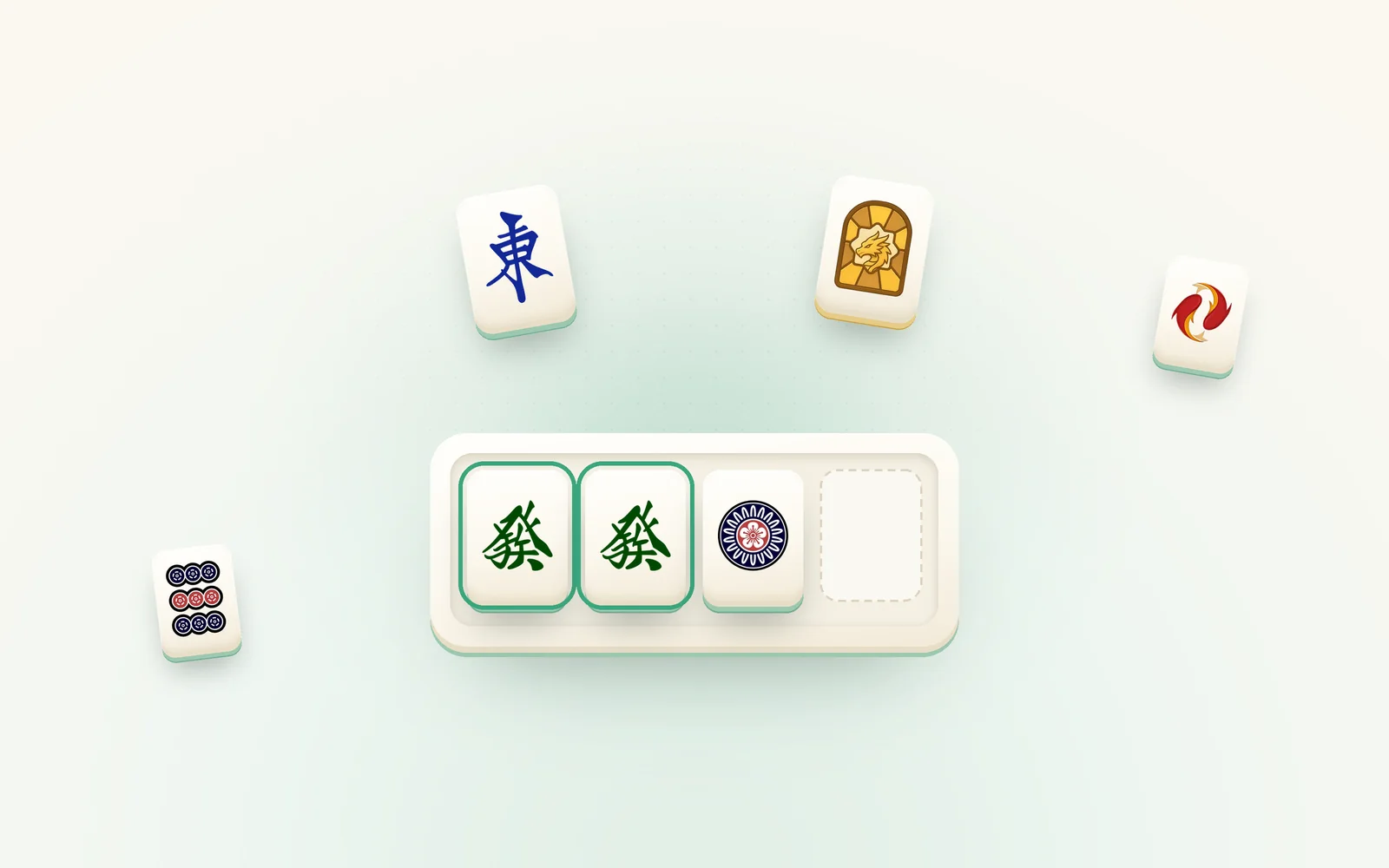
- Collection trays, where tiles are tapped into a small tray and matched there. This idea was borrowed from tile-collecting puzzle games and adds a layer of planning to the classic rules.
Where Mahjong Elite fits in
Mahjong Elite keeps the heart of Shanghai: free tiles, layered layouts and identical pairs. It adds a 4-slot tile tray, a journey of 500+ levels across nine ocean worlds, special tiles introduced one at a time, and real-time duels with friends. If you want to see where four decades of tile matching have led, it is free on the App Store.
Timeline
| Year | Milestone |
|---|---|
| Late 1800s | Mahjong emerges in China as a four-player game |
| 1920s | Mahjong craze in the United States and Europe |
| 1981 | Brodie Lockard writes Shanghai on the PLATO system |
| 1986 | Activision publishes Shanghai for home computers |
| 1990s–2000s | Mahjong solitaire spreads on Windows PCs |
| 2010s–today | Mobile versions add levels, trays and special tiles |
Frequently asked questions
- Who invented mahjong solitaire?
- Brodie Lockard, an American programmer, who wrote the first version, called Shanghai, on the PLATO computer system in 1981. Activision published it commercially in 1986.
- Is mahjong solitaire an ancient Chinese game?
- No. Mahjong, the four-player game, dates to 19th-century China. The solitaire matching game is a computer-era invention from the 1980s that borrows mahjong tiles.
- What is the turtle layout?
- The classic 144-tile pyramid used by Shanghai and many later games. Seen from above it resembles a turtle, with a tall centre stack and tiles sticking out at the sides like legs and a tail.