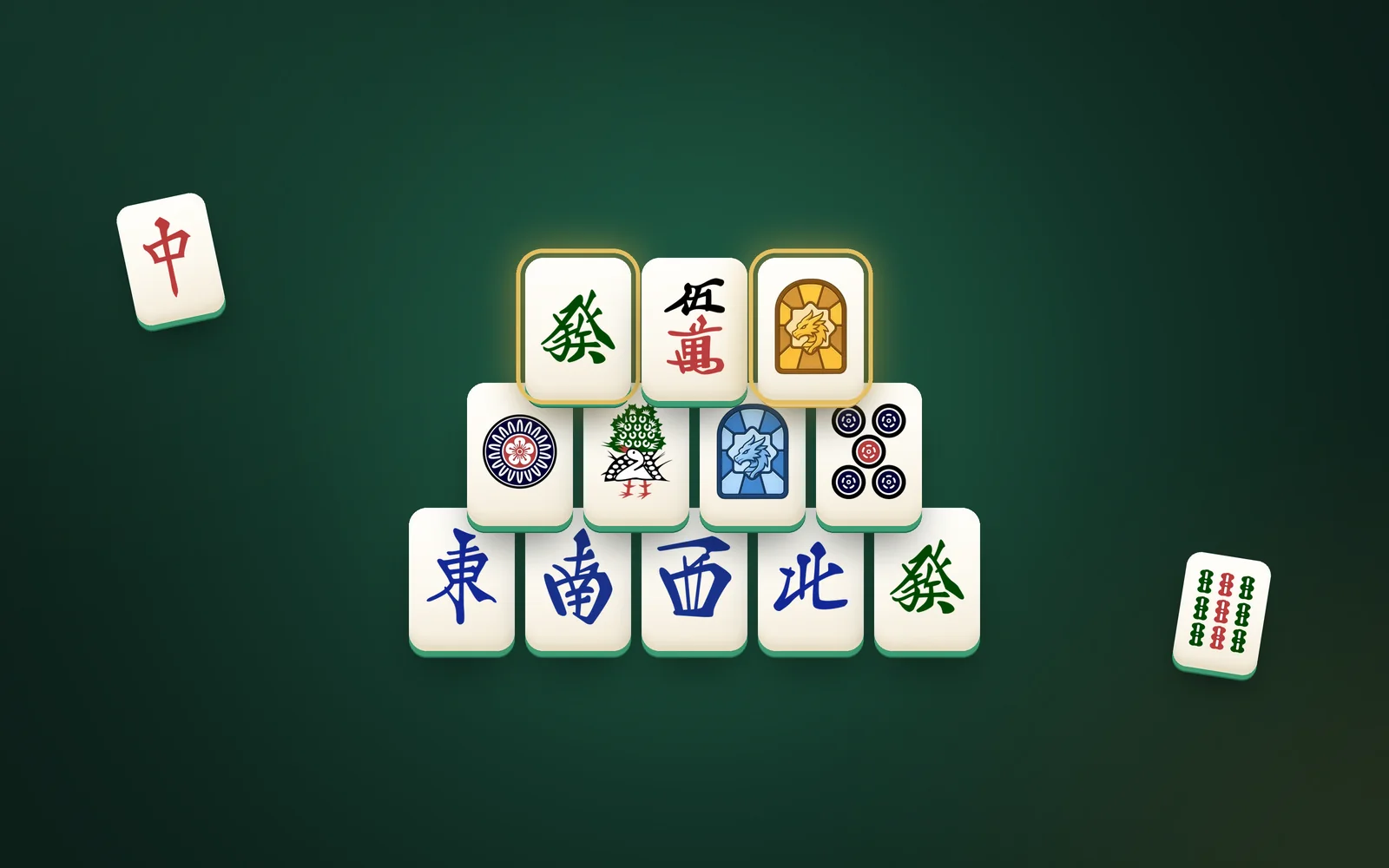
If you have ever stared at a mahjong board wondering whether two tiles are the same, this guide is for you. Mahjong tiles look complex, but they follow a simple system. Once you know the categories, matching becomes much faster.
The full set at a glance
| Group | Tiles | Copies | Total |
|---|---|---|---|
| Dots (circles) | 1 to 9 | 4 each | 36 |
| Bamboo (sticks) | 1 to 9 | 4 each | 36 |
| Characters (wan) | 1 to 9 | 4 each | 36 |
| Winds | East, South, West, North | 4 each | 16 |
| Dragons | Red, Green, White | 4 each | 12 |
| Flowers | 4 different | 1 each | 4 |
| Seasons | 4 different | 1 each | 4 |
| Total | 144 |
The three suits
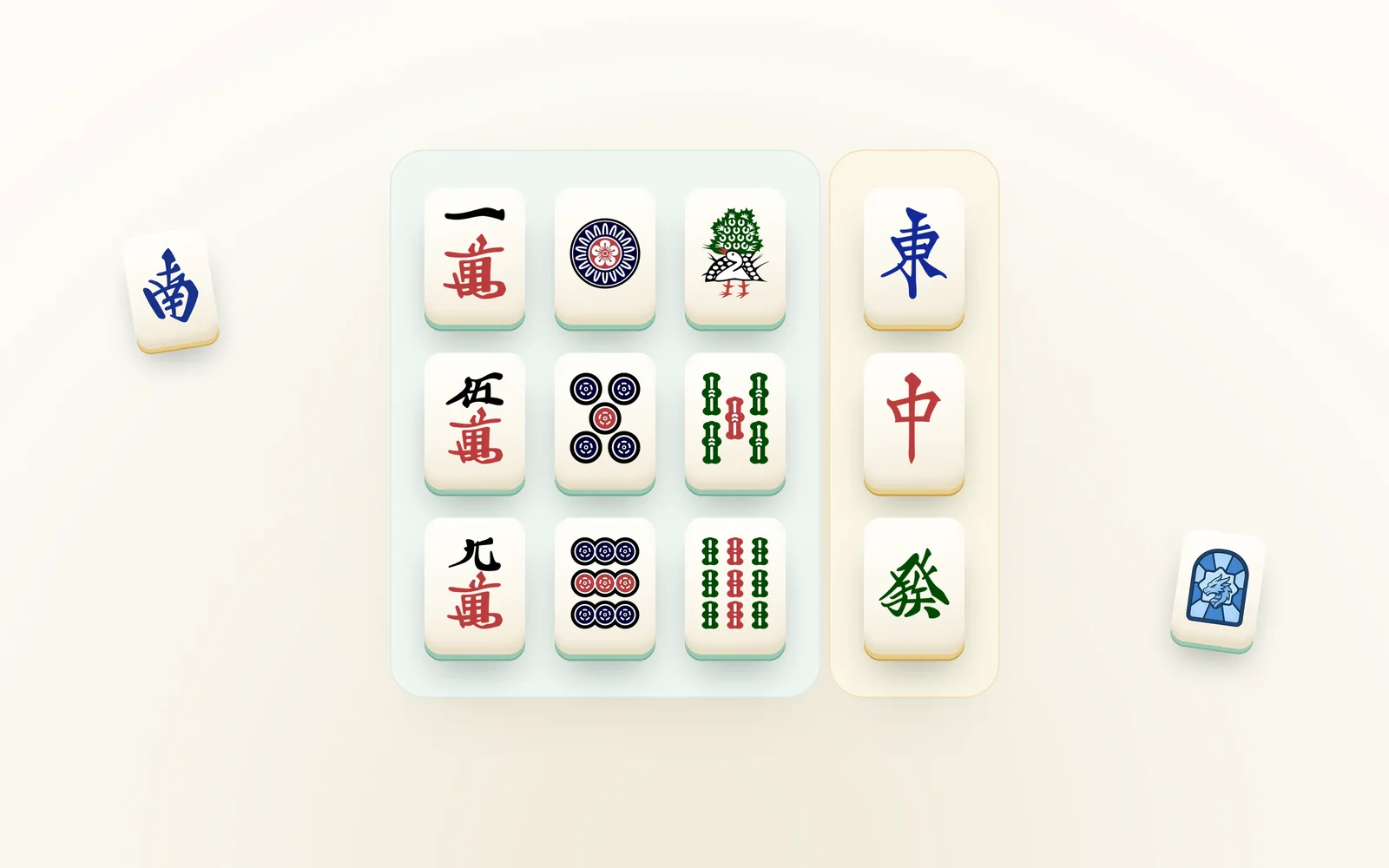
The suits make up three quarters of the set. Each suit is numbered from 1 to 9, and there are four identical copies of every number.
Dots
Also called circles or coins. Each tile shows its number as circles: the 1 of dots is a single large ornate circle, the 9 of dots is a grid of nine. They are the easiest suit to read because you can simply count.
Bamboo
Also called sticks or bams. Each tile shows its number as bamboo sticks. The one exception is the 1 of bamboo, which is traditionally drawn as a bird. If you see a bird, it is a 1 of bamboo.
Characters
Also called cracks or wan (萬). Each tile has a Chinese numeral on top and the character 萬 (“ten thousand”) underneath in red. You only need to read the top symbol:
| 一 | 二 | 三 | 四 | 五 | 六 | 七 | 八 | 九 |
|---|---|---|---|---|---|---|---|---|
| 1 | 2 | 3 | 4 | 5 | 6 | 7 | 8 | 9 |
A tip for beginners: 一, 二 and 三 are just one, two and three horizontal strokes, so start with those.
The honour tiles
Honour tiles have no numbers. There are four copies of each.
Winds
The four winds are written with a single Chinese character, usually in dark blue or black:
- 東 East (dōng)
- 南 South (nán)
- 西 West (xī)
- 北 North (běi)
Dragons
- 中 Red dragon (zhōng, “centre”), a red character.
- 發 Green dragon (fā, “fortune”), a green character.
- White dragon, usually a blank tile or a tile with a blue frame.
Bonus tiles: flowers and seasons
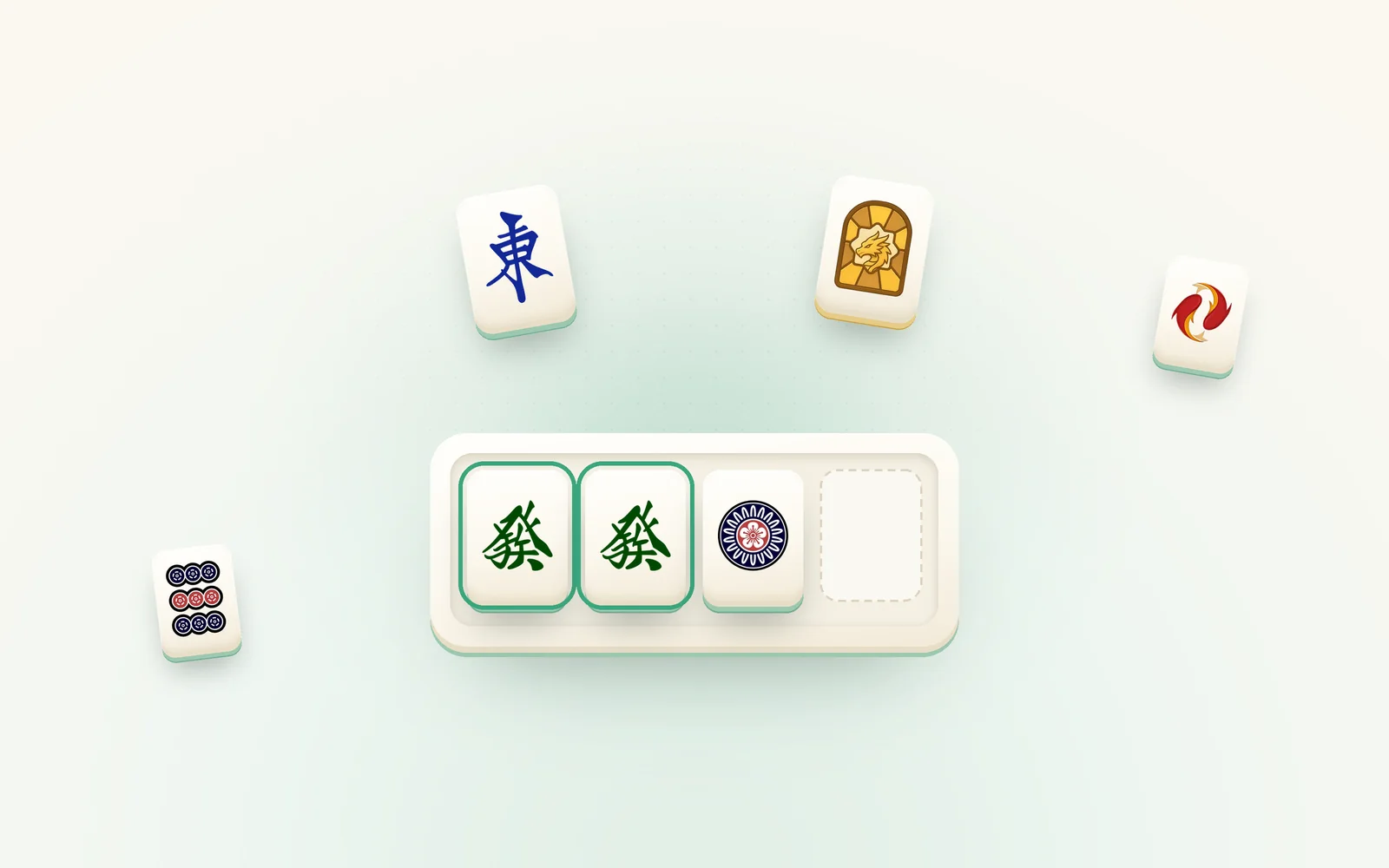
There are four flower tiles and four season tiles, each one unique. In classic mahjong solitaire, any flower matches any other flower and any season matches any other season, which is why they can feel like wildcards.
How Mahjong Elite uses the tiles
Mahjong Elite uses the traditional suits, winds and dragons, plus a set of illustrated tiles with lanterns, fans, koi, flowers and other designs drawn for the game. To keep things clear, tiles match only when their faces are identical. There are no wildcard groups to memorise, and large, high-contrast tiles make each face easy to read on an iPhone screen.
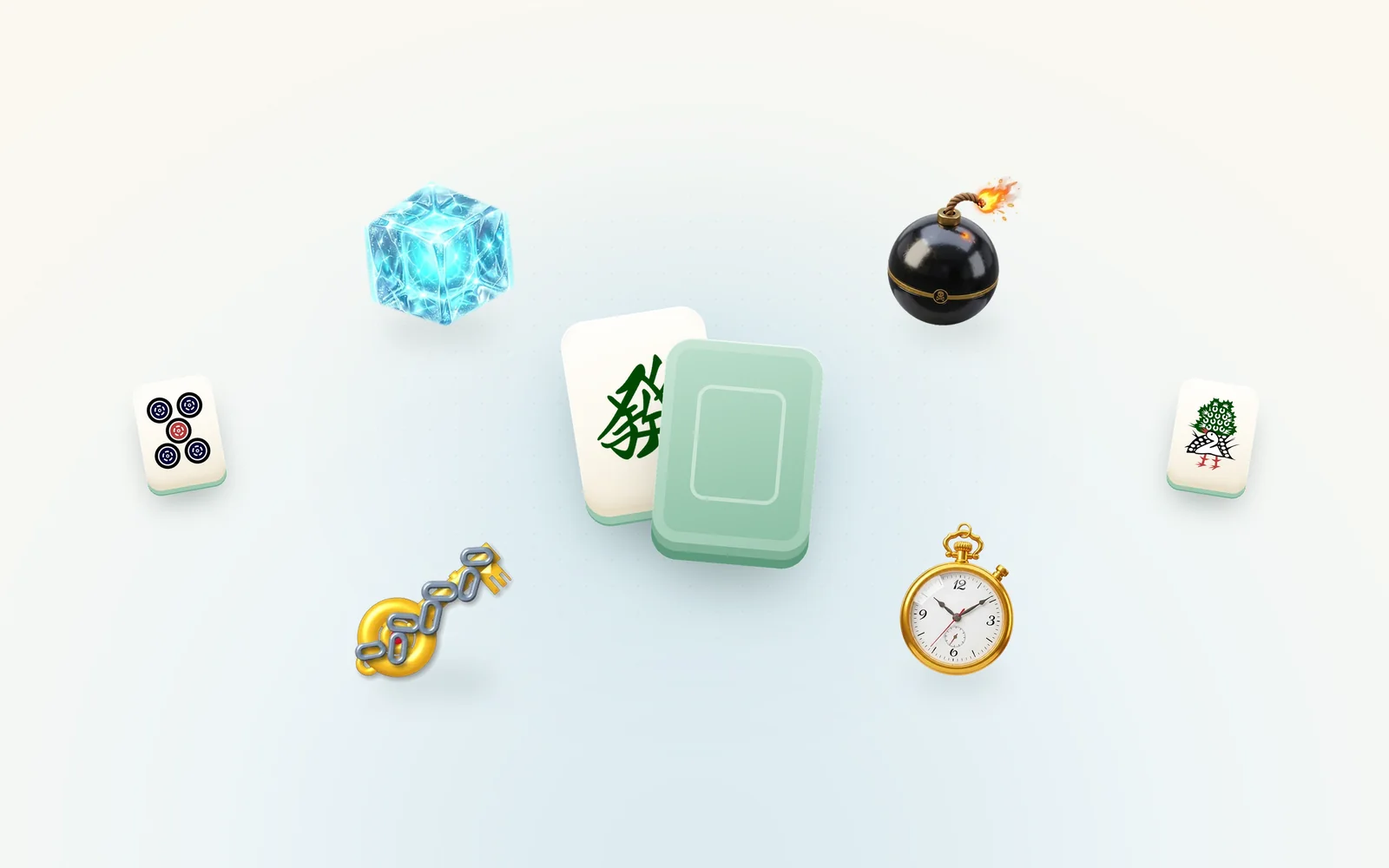
Later levels also add special states on top of normal faces, such as frozen, chained and bomb tiles. They are explained in our special tiles guide.
Quick recognition tips
- Count first. Dots and bamboo can always be counted.
- Look at the top symbol on characters and ignore the red 萬.
- Colour helps. Winds are dark, the red dragon is red, the green dragon is green.
- Learn the odd ones: the bird is 1 bamboo, and the big ornate circle is 1 dots.
Want to put this into practice? Read how to play mahjong solitaire, or download Mahjong Elite and start matching.
Frequently asked questions
- How many tiles are in a mahjong set?
- A standard Chinese set has 144 tiles. Some regional sets add jokers or drop the bonus tiles.
- What are the three suits in mahjong?
- Dots (also called circles or coins), bamboo (sticks) and characters (also called cracks or wan). Each suit runs from 1 to 9.
- What does the red 中 tile mean?
- It is the red dragon, 中 (zhōng), meaning "centre" or "middle". The green dragon is 發 (fā) and the white dragon is usually a blank or framed tile.
- Why is the 1 of bamboo a bird?
- By tradition, the 1 of bamboo is drawn as a bird, often a peacock or sparrow, instead of a single stick.