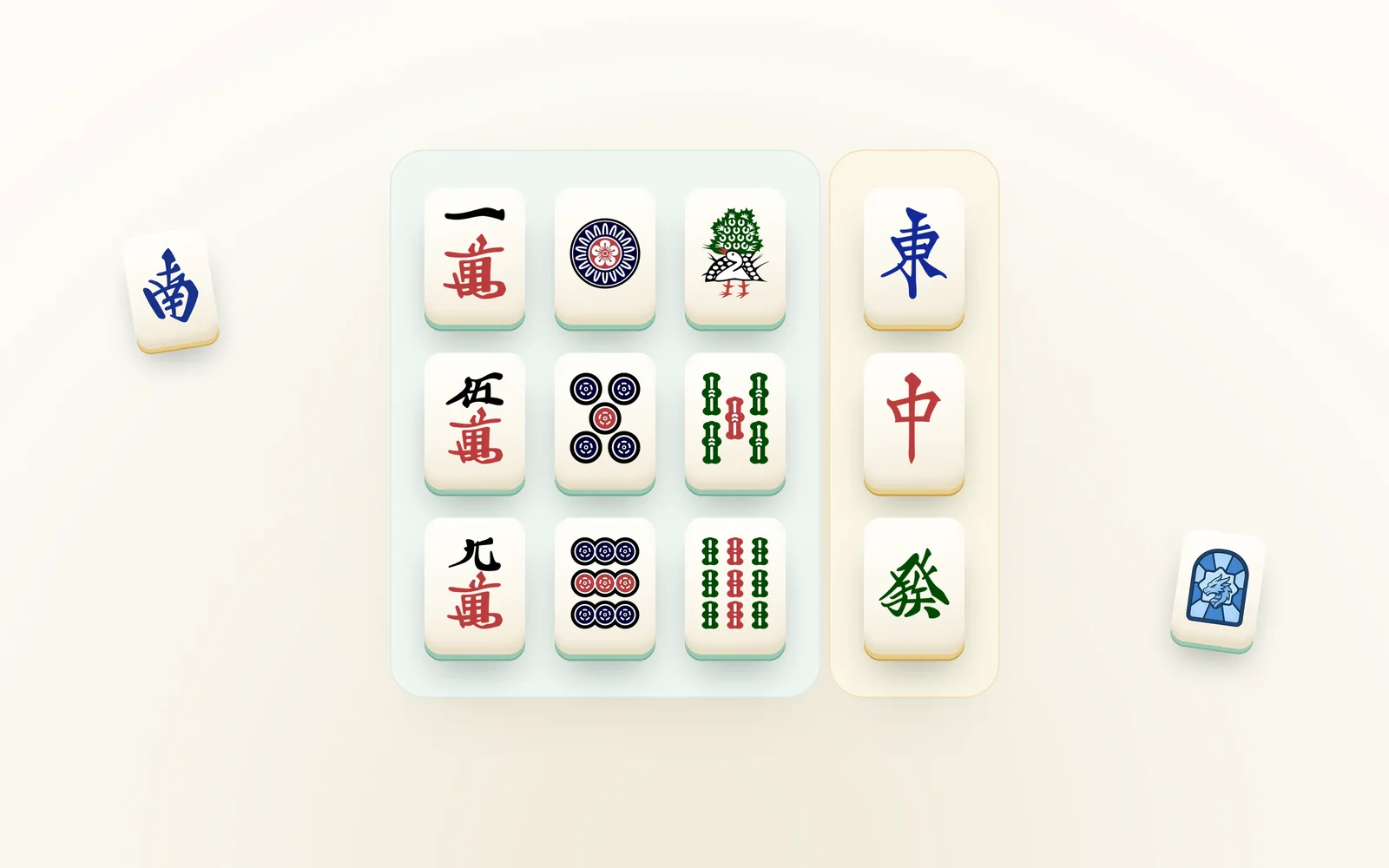
Mahjong solitaire looks intimidating the first time you see it: a tall, layered pile of ornate tiles covered in characters, circles and bamboo sticks. The good news is that the rules fit in a single sentence. Remove identical tiles in pairs, but only tiles that are free. Everything else is strategy.
This guide walks you through the rules step by step, explains the one concept that confuses most beginners (what “free” actually means), and ends with a short checklist for your first game.
The goal
At the start of a game the tiles are arranged in a layout, a pattern of stacked layers such as the classic “turtle” pyramid. Your goal is to empty the board completely. Each move removes two identical tiles at once, so a board always contains an even number of tiles and each face appears in pairs.
You lose when there are tiles left but no legal pairs to remove. Many apps let you shuffle the remaining tiles or undo moves when that happens; we will come back to that.
What makes a tile free
This is the rule that matters most. A tile is free (also called open or unlocked) when both of these are true:
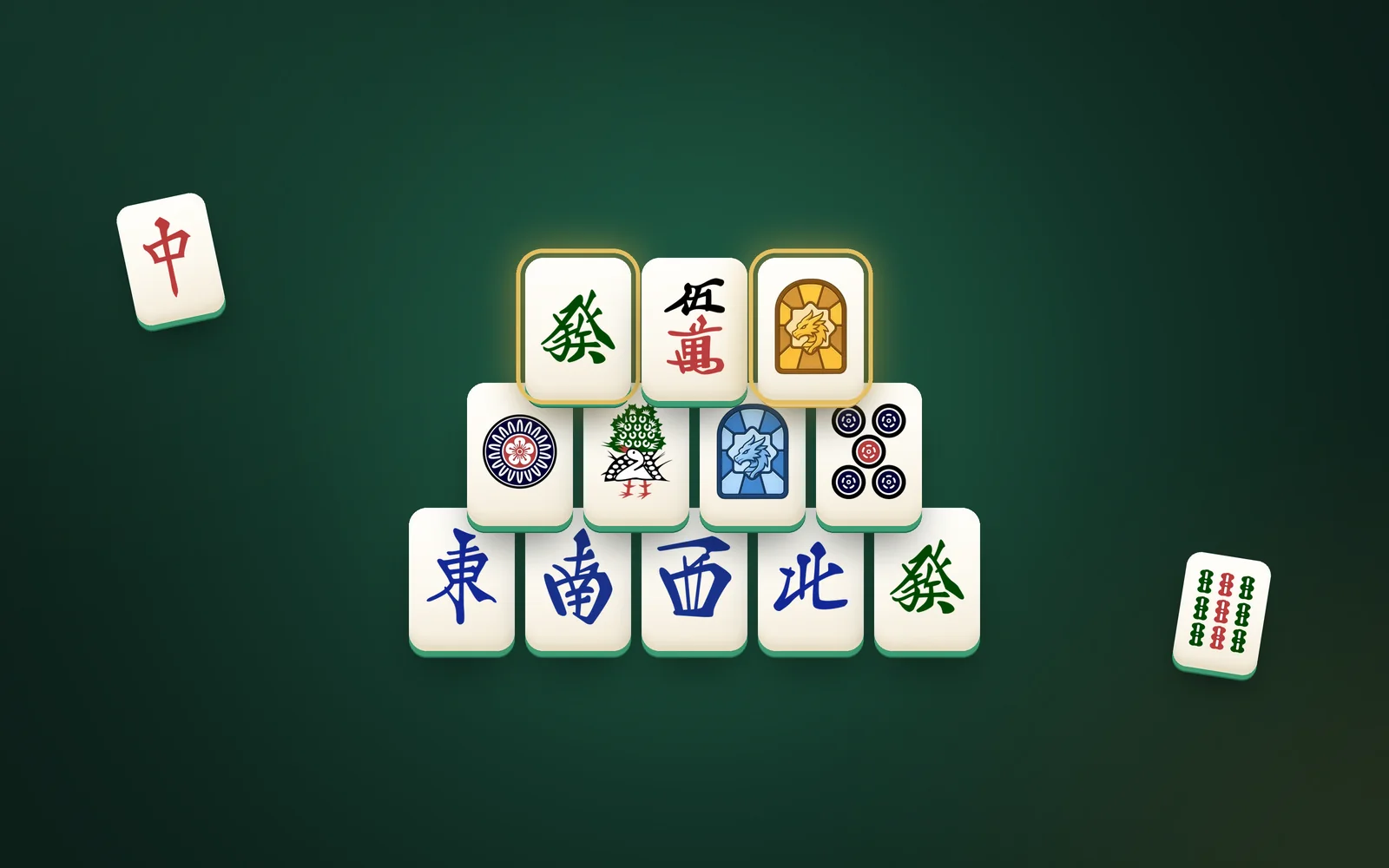
- Nothing sits on top of it. If any part of another tile on a higher layer covers it, it is blocked.
- At least one long side is open. The tile must not be touching another tile on both its left and its right side on the same layer. Tiles above and below in the same row do not matter, only left and right.
A quick way to picture it: imagine sliding the tile out of the pile sideways without lifting anything. If it can slide out to the left or to the right, it is free.
Most apps help you see this. Free tiles are usually brighter, and blocked tiles are dimmed or simply do nothing when tapped.
Matching tiles
Two tiles match when they show the same face: the same suit and the same number, the same wind or the same dragon. A traditional set has four copies of most faces, so there are usually several possible partners for any tile.
In the traditional game, the four flower tiles match each other and the four season tiles match each other, even though their pictures differ. Mahjong Elite keeps it simple: tiles match only when their faces are identical, so what you see is what you match. See our mahjong tiles guide for every suit and symbol.
Taking turns, step by step
- Scan the free tiles. Look at the edges of each row and the top of every stack.
- Find a pair. Two free tiles with the same face form a legal move.
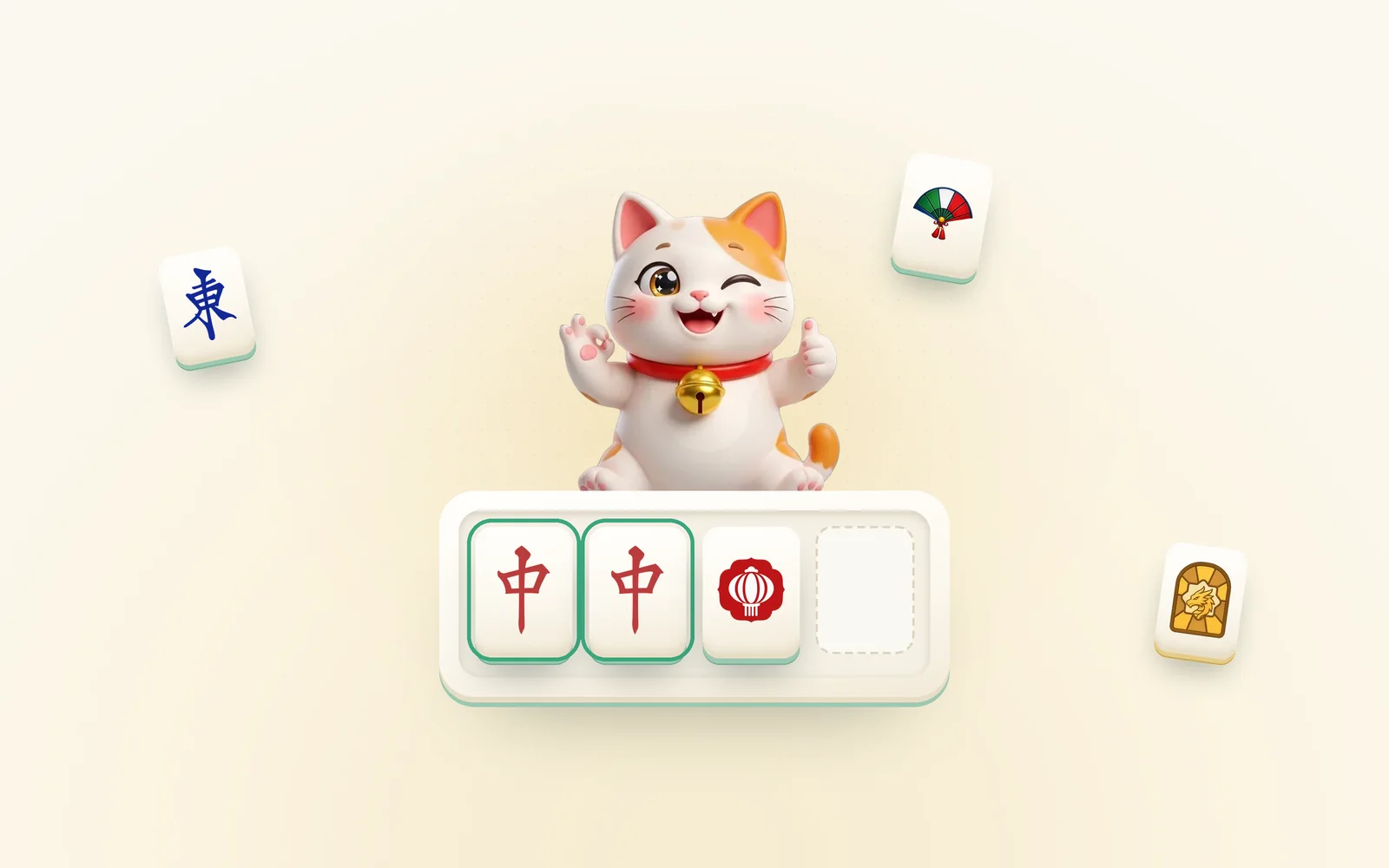
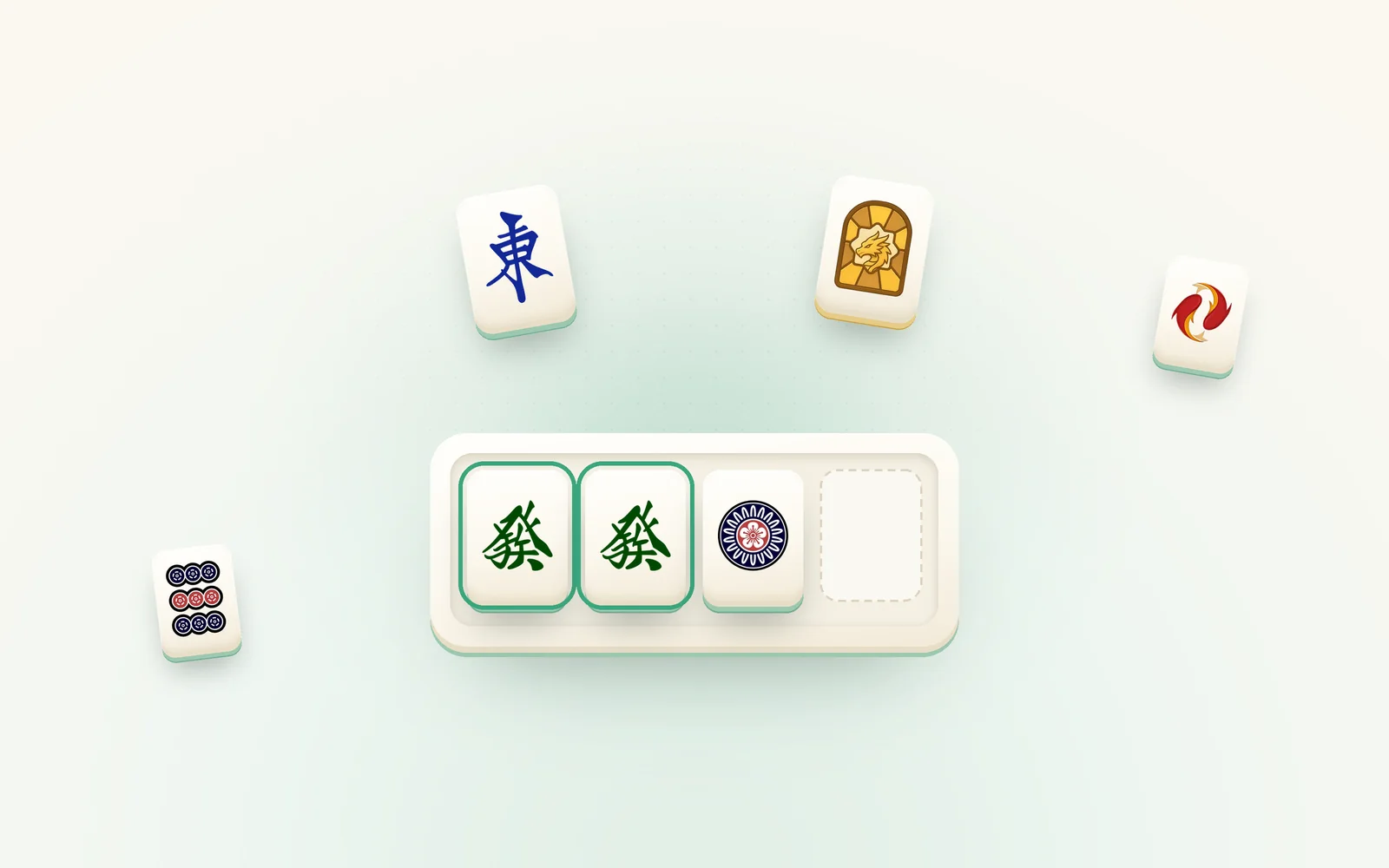
- Remove them. In classic apps you tap both tiles. In a tray-based game like Mahjong Elite, you tap free tiles one by one and they fly into a small tray, where matching tiles clear automatically.
- Look at what opened up. Each removal can free new tiles. Check what was underneath and what is now at the end of a row.
- Repeat until the board is empty or no moves are left.
How layers and rows work together
Beginners often clear whatever pair they see first. That works on easy boards, but on bigger layouts it can bury the tiles you need. Two ideas help:
- Tall stacks are the bottleneck. A tile at the bottom of a five-layer stack can only be reached after four other tiles are gone. Clearing high stacks early opens more of the board.
- Long rows open from the ends. A row of twelve tiles can only be worked from its two ends. Shortening long rows gives you more free tiles to work with.
Our strategy guide goes deeper into planning ahead.
Hints, shuffles and undo
Most digital versions give you three helpers:
- Hint highlights a legal pair when you are stuck.
- Shuffle rearranges the remaining tiles when no moves are left.
- Undo takes back your last move.
In Mahjong Elite these boosters are part of your inventory: they stay with your account between levels, and you can buy more with in-game coins. Using fewer hints and shuffles earns more stars on a level.
The tray variation
Mahjong Elite plays the classic rules with one twist. Instead of selecting two tiles on the board, you tap free tiles into a 4-slot tray. When two identical tiles meet in the tray, they clear. If all four slots fill without a match, the run is over. It rewards planning: before you tap, ask whether that tile’s partner is free or about to be. The tile tray guide explains the variation in detail.
Your first-game checklist
- Tap only bright, free tiles.
- Prefer pairs that open something new over pairs that open nothing.
- Work on tall stacks and long rows first.
- When three or four copies of a face are free, think about which pair to take, not just whether to take one.
- Save hints for when you are truly stuck. Learning to spot pairs yourself is what makes later levels fun.
Ready to try it? Download Mahjong Elite on the App Store and start with the first world, where the boards are small and the rules are introduced one at a time.
Frequently asked questions
- What is the goal of mahjong solitaire?
- To clear every tile from the board by removing identical tiles in pairs. Only free tiles can be picked.
- What makes a tile free in mahjong solitaire?
- A tile is free when nothing is stacked on top of it and its left or right side is not touching another tile on the same layer.
- Is mahjong solitaire the same as mahjong?
- No. Mahjong is a four-player game of drawing and discarding tiles to build hands. Mahjong solitaire only borrows the tiles and is a one-player matching puzzle.
- Can every mahjong solitaire board be won?
- Not always in randomly dealt games. In Mahjong Elite every level is built from a winning removal order, so a solution always exists.